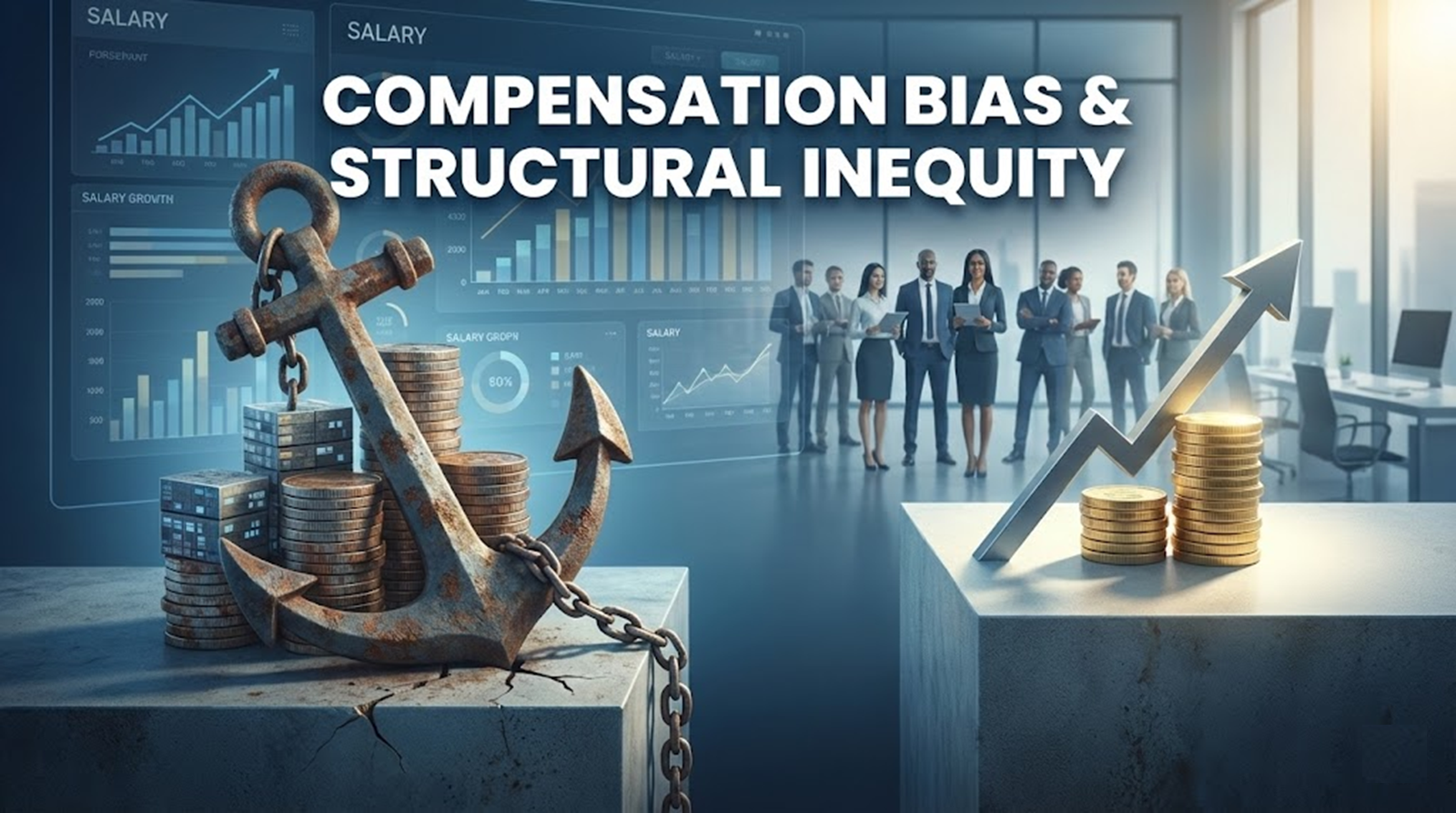
Compensation decisions are critical for attracting and retaining talent, yet they are frequently influenced by unconscious biases that perpetuate pay inequity. Biases like anchoring and reliance on salary history can create structural disadvantages, particularly for women and underrepresented groups. Thrivania is committed to "Fair Assessment" and "Bias-Free Opportunity" by promoting equitable compensation practices.
Biases Leading to Compensation Inequity
Key biases that impact compensation and opportunities include:
- Anchoring Bias: Relying too heavily on the first piece of information received (e.g., a candidate's previous salary expectation or a low initial offer) when making decisions. This can unfairly set the bar.
- Salary History Bias: Basing new salary offers on a candidate's previous salary rather than on market value, skills, or the requirements of the new role. This perpetuates historical pay inequities, especially for those who have been underpaid in the past.
- Expectation Anchor: Initial salary or role setting expectations that compound over time, creating widening gaps between employees who started at different levels.
These biases create structural inequities that compound over entire careers, making it nearly impossible for individuals to catch up once they start behind.
Thrivania's Approach: Equitable Compensation Practices
Thrivania helps organizations build fairer compensation systems:
1. Market-Based Compensation Recommendations
Our platform provides market-based compensation recommendations based on skills, experience, and role requirements—not previous salary. This helps organizations make fair offers that reflect true value.
Impact: Reduces anchoring and salary history bias, ensuring offers are based on merit and market value.
2. Skills-Based Role Valuation
By evaluating candidates based on demonstrated skills and potential rather than previous titles or salaries, Thrivania helps organizations set compensation based on actual capability and contribution.
Impact: Ensures compensation reflects true value and potential, not historical inequities.
Conclusion: Building Fairer Compensation Systems
By addressing compensation biases, Thrivania helps organizations build fairer systems that recognize true value and potential, ensuring that compensation reflects contribution, not historical inequities or anchoring effects.
Create fairer compensation practices with Thrivania's data-driven approach to talent valuation.